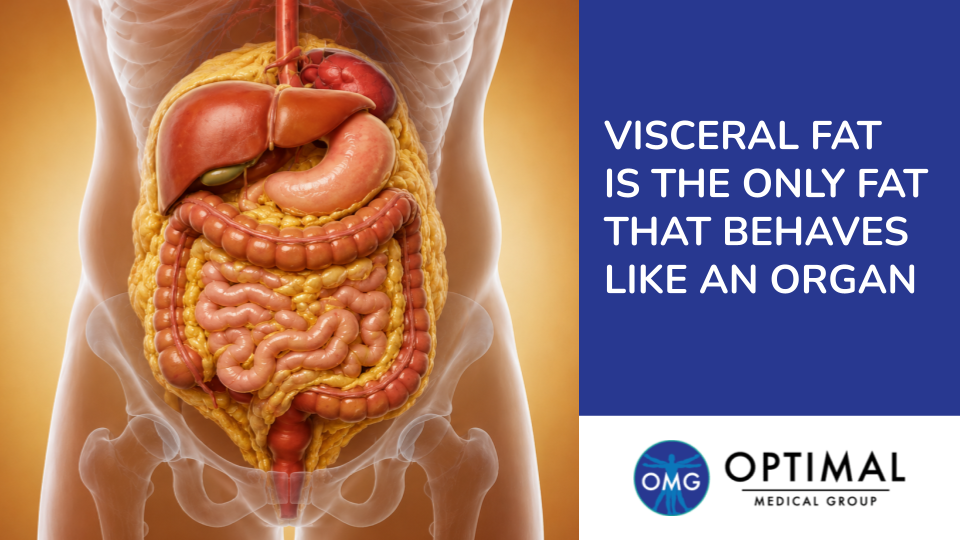
Visceral fat, the fat packed around the liver, pancreas, and intestines, behaves like an active organ rather than simple storage. It releases inflammatory signals into the bloodstream and drives insulin resistance. Losing it delivers one of the fastest health returns in weight loss, and a DEXA scan can measure it directly, in grams.
Adults working to lose weight, and anyone concerned about blood sugar, inflammation, or heart health, benefit from knowing their number. It matters because visceral fat often responds first, well before the scale shows much change, which makes it an early sign that a plan is working.
Key Takeaways of Visceral Fat
The body stores fat in two main ways. Subcutaneous fat sits under the skin and stores energy quietly, while visceral fat packs deep in the abdomen around the liver, pancreas, and intestines.
Visceral fat is metabolically active tissue. It releases inflammatory messengers into the bloodstream that reach the whole body, which is why it behaves more like an organ than a passive energy reserve.
That inflammatory activity drives insulin resistance forward. Insulin resistance makes it harder for the body to manage blood sugar and is closely tied to type 2 diabetes and cardiovascular risk.
Visceral fat is hard to judge by eye or by the scale. A DEXA scan quantifies it directly, separate from every other tissue in the body, so the result is a measured number instead of an educated guess.
Visceral fat often responds quickly to a proper plan. It is frequently one of the first things to move, well before body weight reflects much change.
Because it responds early, a falling visceral fat measurement can be the earliest confirmation that a weight loss plan is working, which helps keep motivation and decisions grounded in real data.
Biological age, the pace at which the body is actually aging, can be measured, and it often lands years ahead of or behind the age on a birth certificate. Three areas carry most of the answer: aerobic fitness, lean muscle mass, and metabolic markers, and each one can be tested this month.Adults who want to…
Optimized testosterone protects the two tissues that play a major role in maintaining strength and stability into later life: muscle and bone. Both can decline as testosterone levels fall, and both may respond when levels are brought back into a healthy range, especially when hormone therapy is paired with resistance training.Those noticing lost strength, slower…
Four blood tests show how well the heart and metabolism are truly performing: ApoB, Lp(a), hs-CRP, and fasting insulin. Most people have never had a single one of them run, because routine bloodwork usually stops at a basic cholesterol panel and blood sugar.Adults who want a clearer view of heart and metabolic health, especially those…
The muscle protected while losing weight is what keeps the weight from coming back. Muscle burns energy around the clock, even at rest, and it pulls sugar out of the bloodstream that would otherwise circulate and get stored. More lean tissue means a higher daily burn and steadier blood sugar without extra effort.Anyone working to…