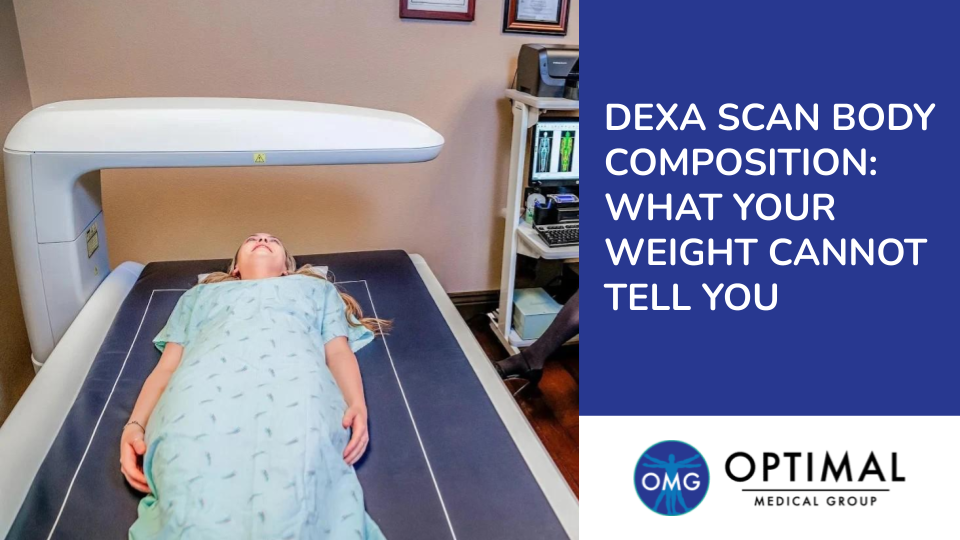
A DEXA scan body composition test is the clinical gold standard for measuring what the body is actually made of. It separates bone, fat, and lean muscle with clinical precision. Unlike a bathroom scale, a BMI calculation, or a handheld device, DEXA uses dual-energy X-ray absorptiometry to see inside the body. It maps exactly where fat and muscle sit. Two people can weigh the same and carry completely different compositions underneath.
The scan reveals that difference with clinical precision. It also measures bone mineral density, catching silent bone loss years before a fracture ever occurs. For anyone serious about tracking real progress or understanding how their body is aging, a DEXA scan provides the baseline no other test can match.
The scan provides regional data showing where fat and muscle are distributed across the arms, legs, and trunk, far more detail than a total body weight.
Bone mineral density testing identifies osteopenia and osteoporosis before symptoms or fractures appear, using T-score and Z-score comparisons.
The procedure takes approximately six to twelve minutes, uses minimal radiation, and requires no injections or preparation.
Serial DEXA scans track measurable changes over time, confirming whether a training, nutrition, or hormone protocol is producing real results.
A coronary calcium score looks directly at the heart's arteries and returns a single number, instead of estimating risk from a formula. It comes from a quick CT scan that finds calcium deposits in the arteries supplying the heart. The scan uses no contrast dye and requires no needle. It measures calcified plaque and reports…
Estradiol in men is essential, and its level is one of the most overlooked numbers in men's health. The male body converts part of its testosterone into estradiol through an enzyme called aromatase. That estradiol helps maintain bone density, keeps joints comfortable, supports blood vessel function, and contributes to libido. Testosterone alone does not deliver…
An Lp(a) test is a single blood draw that reveals an inherited heart risk no other test will show. Lipoprotein(a), or Lp(a), is a particle similar to LDL with an extra protein attached. The amount a person makes is set largely by genes. Diet and exercise do little to change it. About one in five…
P-Shot® results follow a predictable timeline, which means men can plan around what changes and when. The P-Shot®, short for Priapus Shot®, uses platelet-rich plasma (PRP) drawn from a man's own blood. Those platelets release growth factors that recruit repair cells and stimulate new blood vessel formation. That process is biological construction, and construction takes…