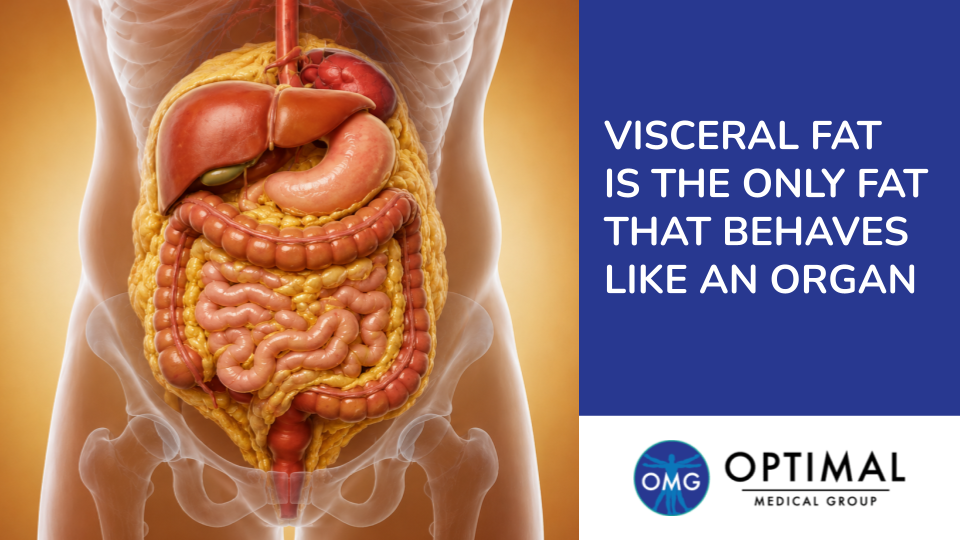
Visceral fat, the fat packed around the liver, pancreas, and intestines, behaves like an active organ rather than simple storage. It releases inflammatory signals into the bloodstream and drives insulin resistance. Losing it delivers one of the fastest health returns in weight loss, and a DEXA scan can measure it directly, in grams.
Adults working to lose weight, and anyone concerned about blood sugar, inflammation, or heart health, benefit from knowing their number. It matters because visceral fat often responds first, well before the scale shows much change, which makes it an early sign that a plan is working.
Key Takeaways of Visceral Fat
The body stores fat in two main ways. Subcutaneous fat sits under the skin and stores energy quietly, while visceral fat packs deep in the abdomen around the liver, pancreas, and intestines.
Visceral fat is metabolically active tissue. It releases inflammatory messengers into the bloodstream that reach the whole body, which is why it behaves more like an organ than a passive energy reserve.
That inflammatory activity drives insulin resistance forward. Insulin resistance makes it harder for the body to manage blood sugar and is closely tied to type 2 diabetes and cardiovascular risk.
Visceral fat is hard to judge by eye or by the scale. A DEXA scan quantifies it directly, separate from every other tissue in the body, so the result is a measured number instead of an educated guess.
Visceral fat often responds quickly to a proper plan. It is frequently one of the first things to move, well before body weight reflects much change.
Because it responds early, a falling visceral fat measurement can be the earliest confirmation that a weight loss plan is working, which helps keep motivation and decisions grounded in real data.
Two Kinds of Fat, Two Different Jobs
Not all body fat carries the same health impact. Where fat sits in the body shapes what it does and how much risk it carries.
Subcutaneous Fat Stores Energy
Subcutaneous fat sits just under the skin. It is the fat that can be pinched on the arms, thighs, hips, and belly, and its main job is storing energy and providing some insulation and cushioning.
Subcutaneous fat is not harmless in large amounts, but it is generally less metabolically active. For many people, it changes the way clothes fit more than it changes internal health markers.
Visceral Fat Surrounds the Organs
Visceral fat lies deeper, inside the abdominal cavity. It packs around the liver, pancreas, and intestines, organs that play central roles in metabolism and blood sugar control.
Because it sits out of sight, it can be significant even in people who do not look overweight. A flat-looking stomach does not guarantee low visceral body fat, and a larger frame does not automatically mean high visceral fat.
Why Visceral Fat Behaves Like an Organ
Visceral fat does far more than store energy. It produces chemical signals that influence the rest of the body, the way an organ does.
Inflammatory Signals in the Bloodstream
Visceral fat tissue releases inflammatory messengers, small proteins that travel through the bloodstream and reach the whole body. Its location also means many of these signals flow directly toward the liver.
Ongoing, low-level inflammation is linked to a range of chronic health problems, including heart disease and fatty liver. Reducing visceral fat lowers one of the body's steady sources of that inflammation.
How It Drives Insulin Resistance
Insulin is the hormone that helps move sugar from the blood into cells for energy. Insulin resistance means cells respond less well to that signal, so the body needs more insulin to keep blood sugar in range.
The inflammatory activity of visceral fat is what drives insulin resistance forward. Over time, insulin resistance can progress toward prediabetes and type 2 diabetes, which is why visceral fat is such an important number to track.
Measuring Visceral Fat With a DEXA Scan
This fat cannot be seen in a mirror or read from a bathroom scale. Measuring it directly removes the guesswork.
How a DEXA Scan Reports Visceral Fat
DEXA stands for dual-energy X-ray absorptiometry. The scan separates the body into fat, lean tissue, and bone, and it isolates visceral fat from every other tissue on the frame.
The result is reported as a measured amount, such as grams of visceral fat. That number provides a clear baseline and makes later comparisons straightforward.
Why Weight and BMI Miss It
Body weight and body mass index (BMI) treat the body as a single number. They cannot tell fat from muscle, and they cannot show where fat is stored.
Two people with the same weight can carry very different amounts of fat. Direct measurement shows what the scale cannot, which helps focus a plan on the fat that matters most for health.
Visceral Fat Responds First
The encouraging part about visceral fat is how quickly it can change. It is often among the first fat stores to shrink under a well-designed plan.
Change Before the Scale Moves
Visceral fat frequently moves before the scale does. Early in a plan, body weight may shift only slightly while this organ fat is already decreasing.
That gap can be discouraging when only the scale is watched. A repeat scan can reveal real progress that weight alone hides, which helps people stay on track.
Habits That Support Visceral Fat Loss
Consistent nutrition, regular physical activity that includes both strength training and aerobic exercise, quality sleep, and stress management all support visceral fat loss. Limiting added sugars and alcohol can also help.
Tracking visceral fat over time confirms which changes are working. Each new measurement turns effort into a visible, objective result.
Visceral Fat Testing and Medical Weight Loss in Fresno, California (CA)
Optimal Medical Group helps adults in Fresno take a measured approach to weight loss. A DEXA scan quantifies visceral fat directly, so progress is tracked in clear numbers rather than weight alone.
Visceral fat is fat stored deep in the abdomen around the liver, pancreas, and intestines. Unlike fat under the skin, it is metabolically active and releases inflammatory signals into the bloodstream.
Why Is Visceral Fat More Harmful Than Subcutaneous Fat?
Visceral fat behaves like an organ. Its inflammatory activity drives insulin resistance, which is linked to type 2 diabetes and heart disease.
How Is Visceral Fat Measured?
A DEXA scan measures visceral fat directly and reports it in grams, separate from muscle, bone, and fat under the skin.
How Quickly Can Visceral Fat Be Reduced?
Visceral fat often responds early in a well-designed plan, frequently changing before the scale shows much difference. Repeat measurement confirms the progress.
Conclusion and Summary of Visceral Fat
Visceral fat is not just stored energy. Packed around the liver, pancreas, and intestines, it acts like an organ, releasing inflammatory signals that reach the whole body and drive insulin resistance.
Because it hides out of sight, visceral fat cannot be judged by appearance, weight, or BMI. A DEXA scan quantifies it directly in grams, separate from every other tissue, giving a real number to work from.
Visceral fat also responds early, often before the scale moves, which makes it one of the earliest confirmations that a weight loss plan is working. Optimal Medical Group in Fresno uses that measurement to keep weight loss focused on the fat that matters most for health.
Schedule your Medical Weight Loss consultation here, or call us today at (559) 840-0066 and discover how measured, data-driven weight loss is helping patients across Fresno, California lose the fat that matters most for long-term health!
Testosterone is the most abundant active sex hormone in a woman's body, and its level shapes how strong, focused, and motivated she feels. It circulates at lower concentrations than in men, yet it does substantial work, from building lean muscle and maintaining bone to driving a significant share of libido.Women in their thirties, forties, and…
Most thyroid panels stop at TSH and leave out thyroid antibodies, the test that shows whether the immune system is attacking the gland. Antibodies often appear years before hormone levels shift, which makes them the earliest warning sign available for autoimmune thyroid disease, the most common cause of thyroid dysfunction.Adults who feel tired, foggy, or…
The strongest P-Shot® results come to men who treat the therapy as a plan rather than a single appointment. Each treatment builds new blood vessel growth on top of the last, so circulation improves from a stronger starting point every time. Results also depend on what surrounds the treatment, especially hormone levels and blood sugar…
A grip strength test predicts mortality risk better than a blood pressure reading does. The test takes under a minute: a firm squeeze on a handheld device that records force in kilograms. That single number reflects total body muscle quality, nerve efficiency, and recovery capacity, which is why it tracks so closely with long-term outcomes.Adults…