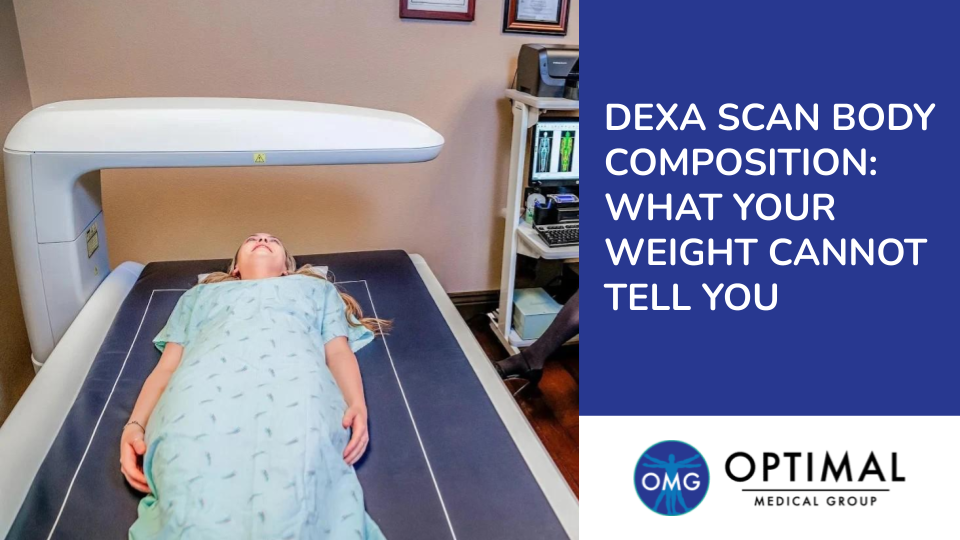
A DEXA scan body composition test is the clinical gold standard for measuring what the body is actually made of. It separates bone, fat, and lean muscle with clinical precision. Unlike a bathroom scale, a BMI calculation, or a handheld device, DEXA uses dual-energy X-ray absorptiometry to see inside the body. It maps exactly where fat and muscle sit. Two people can weigh the same and carry completely different compositions underneath.
The scan reveals that difference with clinical precision. It also measures bone mineral density, catching silent bone loss years before a fracture ever occurs. For anyone serious about tracking real progress or understanding how their body is aging, a DEXA scan provides the baseline no other test can match.
The scan provides regional data showing where fat and muscle are distributed across the arms, legs, and trunk, far more detail than a total body weight.
Bone mineral density testing identifies osteopenia and osteoporosis before symptoms or fractures appear, using T-score and Z-score comparisons.
The procedure takes approximately six to twelve minutes, uses minimal radiation, and requires no injections or preparation.
Serial DEXA scans track measurable changes over time, confirming whether a training, nutrition, or hormone protocol is producing real results.
What a DEXA Scan Actually Measures
A DEXA scan separates the body into three compartments: bone mineral content, fat mass, and lean soft tissue. That three-part picture is what makes it so much more useful than any single number.
The Three-Compartment Model
Most tools measure weight or estimate body fat percentage using indirect methods. DEXA works differently. It passes two low-energy X-ray beams through the body at different energy levels. Each tissue type, bone, fat, and muscle, absorbs radiation at a different rate.
The scanner uses those absorption differences to calculate exactly how much of each tissue is present and where it sits. The result is a precise map of the body's composition, broken down by region: arms, legs, trunk, and total body.
Why This Matters More Than Weight Alone
A person who weighs 180 pounds could be carrying 25 percent body fat or 15 percent body fat. The scale reads the same. The DEXA scan shows a completely different body underneath.
This distinction matters for health decisions. Someone with a healthy weight on the scale can still carry dangerous levels of visceral fat around the organs. Someone who looks heavy on paper may be carrying significant lean muscle mass. Without a DEXA scan, these differences remain invisible.
How DEXA Measures Bone Mineral Density
Bone density testing is the original clinical purpose of the DEXA scan. It remains one of the most important screenings for adults over forty.
What T-Scores and Z-Scores Mean
A DEXA scan compares bone mineral density to two reference standards. The T-score compares the patient's density to that of a healthy thirty-year-old adult. A score between +1 and -1 is considered normal. Between -1 and -2.5 indicates osteopenia, low bone density. A score of -2.5 or lower indicates osteoporosis.
The Z-score compares the patient's density to someone of the same age, sex, and body size. This score is useful for identifying secondary causes of bone loss in younger patients. Together, T-scores and Z-scores give a physician the data needed to assess fracture risk and guide treatment.
Why Silent Bone Loss Is So Dangerous
Bone loss does not cause pain. There are no visible symptoms until a fracture occurs. By that point, years of quiet decline have already passed.
A bone density scan catches that decline early, while there is still a wide window for intervention. Hormonal support, targeted supplementation, resistance training, and nutrition adjustments can all slow or reverse bone loss when it is identified in time.
What the Body Composition Data Reveals
Beyond bone density, the body composition portion of a DEXA scan provides data that no other tool in a physician's office can match.
Regional Fat and Muscle Distribution
A DEXA scan does not just report total body fat percentage. It shows how fat and lean tissue are distributed across the body. Arm lean mass, leg lean mass, and trunk fat are all reported independently.
This regional detail is clinically valuable. Asymmetrical muscle loss may indicate an injury, nerve issue, or training imbalance. Excess trunk fat correlates with higher cardiovascular and metabolic risk. These insights are invisible on a scale.
Visceral Fat Estimation
Some DEXA scans estimate visceral adipose tissue, the fat stored around internal organs. This type of fat is strongly associated with insulin resistance, cardiovascular disease, and metabolic syndrome.
A person can have a normal BMI and still carry elevated visceral fat. DEXA identifies this hidden risk factor. That information helps a physician make targeted recommendations around nutrition, exercise, and metabolic support.
Why Tracking Over Time Matters
A single DEXA scan establishes a baseline. Serial scans over months and years turn that baseline into a trajectory.
Confirming Whether the Plan Is Working
When a patient starts a training program, changes their nutrition, or begins hormone therapy, progress needs to be measured objectively. Body weight alone does not tell the full story. A patient can lose fat and gain muscle simultaneously, resulting in no change on the scale while the body improves dramatically.
A follow-up DEXA scan shows exactly what shifted. Fat lost. Muscle gained. Bone density maintained or improved. These are the metrics that confirm whether a plan is producing real results at the tissue level.
Setting Measurable Goals
Vague goals like "get stronger" or "lose weight" are hard to track and easy to abandon. DEXA data converts those goals into specific, measurable targets. Increase lean mass by two pounds. Reduce trunk fat by three percent. Maintain a T-score above -1.
When goals are tied to real numbers, progress becomes visible. That visibility builds momentum and keeps patients engaged in the process over the long term.
Frequently Asked Questions About DEXA Scan Body Composition
What is a DEXA scan?
A DEXA scan is a low-radiation imaging test that measures bone mineral density, body fat, and lean muscle mass. It is considered the clinical gold standard for body composition analysis.
How long does a DEXA scan take?
The scan itself takes approximately six to twelve minutes. The patient lies on an open, padded table while the scanner passes over the body. No injections or special preparation are needed.
Is the radiation from a DEXA scan safe?
Yes. The radiation exposure from a DEXA scan is extremely low, less than the natural background radiation a person receives in a single day. It is one of the lowest-dose imaging tests available.
How often should I get a DEXA scan?
For patients actively tracking fitness, fat loss, or muscle gain, scanning every eight to twelve weeks provides useful comparisons. For bone density monitoring, annual or biannual scans are typically recommended.
Can a DEXA scan diagnose osteoporosis?
Yes. A physician-ordered DEXA scan with bone mineral density testing is the standard diagnostic tool for osteopenia and osteoporosis. T-scores from the scan determine whether bone density falls within normal, low, or osteoporotic ranges.
Conclusion and Summary of DEXA Scan Body Composition
A scale tells how much the body weighs. A DEXA scan shows what the body is actually made of. That distinction changes how a physician evaluates health, how a patient sets goals, and how progress is measured over time.
Bone density, body fat distribution, lean muscle mass, and visceral fat all carry different implications for long-term health. Each one is measurable. Each one is modifiable. And each one is invisible without the right test. For anyone invested in understanding their body at a deeper level, a DEXA scan is the clearest, most precise starting point available.
Schedule Your DEXA scan here, or call us today at (559) 840-0066 and discover how these therapies are helping patients across Fresno, California reclaim active, pain-free lives!
Cover Image Illustration by: The Optimal Medical Group.
Knowing how to prevent bone loss starts with understanding two facts that most people learn too late. First, bone loss has no symptoms. There is no pain, no warning sign, and no visible clue until a fracture occurs. Second, hormones play a far bigger role in bone density than most people realize.Estrogen and testosterone both…
Platelet-rich plasma (PRP) for joint pain is a regenerative treatment that uses a patient's own concentrated platelets to support tissue repair at the site of injury. Platelet-rich plasma contains growth factors that stimulate healing in damaged tendons, ligaments, and cartilage, tissues that often struggle to repair on their own. Unlike pain medications or cortisone injections…
Signs you need hormone replacement therapy often hide in plain sight. Afternoon energy crashes, fading motivation, harder workouts, mood swings, stubborn weight, and restless sleep are easy to dismiss as stress or aging. But these symptoms frequently point to a hormonal imbalance that has never been properly tested.Most people live with these changes for months…
Collagen peptides support three of the body's most important structural systems, joints, skin, and bones. Collagen is the most abundant protein in the human body, accounting for roughly thirty percent of total protein content. It forms the framework behind skin elasticity, joint cartilage, bone strength, tendons, and connective tissue.Starting in the mid-twenties, the body produces…