Intense Pulsed Light Therapy: A Guide to Skin Rejuvenation
In recent years, there have been significant advancements in dermatology treatments aimed at improving the appearance and health of your skin. Intense pulsed light therapy, or IPL therapy, can rejuvenate the skin by targeting common cosmetic and health concerns. This non-invasive treatment utilizes broad-spectrum light to address pigmentation irregularities, vascular lesions, and signs of aging.
Understanding intense pulsed light therapy
Intense pulsed light therapy, also known as IPL therapy, is a light-based treatment designed to enhance the tone and texture of the skin. Unlike laser treatments that use a single wavelength, IPL emits multiple wavelengths of light. This means doctors can treat a wider range of skin conditions using this technology.
The IPL therapy device delivers controlled pulses of light energy to the treatment area. Depending on the patient's treatment goals, this light penetrates the skin and targets melanin or hemoglobin. This process helps break down pigmentation and vascular lesions, leading to clearer, more even-toned skin.
Conditions treated with IPL therapy
Medical doctors often recommend intense pulsed light therapy for various dermatological concerns. Some of the most common conditions include:
Hyperpigmentation and sun damage. IPL effectively reduces the appearance of sunspots, freckles, and other forms of hyperpigmentation caused by prolonged sun exposure.
Rosacea and redness. The treatment targets visible blood vessels and reduces overall redness, which is ideal for individuals with rosacea or prone to facial flushing.
Fine lines and wrinkles. By stimulating collagen production, IPL therapy improves skin elasticity, reducing fine lines and wrinkles.
Acne and acne scarring. IPL can help control acne by targeting bacteria and reducing inflammation. Additionally, it can improve the appearance of acne scars.
Unwanted hair. Although commonly associated with skin rejuvenation, doctors can also utilize IPL for hair removal by targeting hair follicles and inhibiting future growth.
The IPL treatment process: what to expect
Consultation
The procedure for intense pulsed light therapy is typically performed in a medical setting under the supervision of a trained medical professional. Patients interested in IPL must schedule a consultation to determine whether they are good treatment candidates. This appointment also allows a provider to discuss with the patient the potential risks of treatment and what results the patient can expect from treatment.
Treatment session
Following the consultation, the doctor will apply a topical numbing cream to the treatment area to minimize discomfort during the treatment session. They will then thoroughly clean the treatment area. The patient will wear dark glasses to protect their eyes.
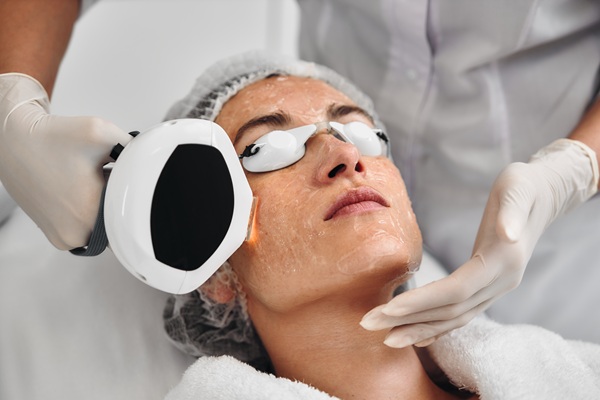
After making the necessary preparations, the doctor will deliver the pulses of light through a handheld IPL device to the targeted area. While many patients are fine with the light pulses, some may experience a stinging sensation like someone snapped a rubber band on them. The numbing cream or gel will typically help mitigate this side effect.
Most IPL treatment sessions last about 20-30 minutes. However, larger treatment areas may require an hour or more. While some individuals notice improvements after a single session, multiple treatments are often required to achieve optimal results. Depending on their goals, they may need up to seven sessions, with two to four weeks between each session.
Post-treatment care
In the first four to six hours after IPL therapy, the patient may feel like they have a sunburn. Ice packs or cool washcloths can provide relief until the sensation subsides. Additionally, their skin may appear red or bruised for a day or two. Some brown spots may get dark, but they will likely peel away within a few weeks.
The doctor will provide specific guidelines to protect the treated skin, including:
Avoid putting on makeup if the skin hurts
Use moisturizing lotion
Wear at least an SPF 30 sunscreen with a physical blocker, reapplying every two hours regardless of the weather
Wash the face with a cleanser for sensitive skin
It will take about a week before the patient can return to their normal skincare routine.
Potential side effects and considerations
Although IPL therapy is considered a safe and non-invasive treatment, there are potential side effects that patients should be aware of and discuss with the doctor before proceeding with treatment. For example, temporary redness, swelling, and mild discomfort are common immediately following the procedure. In rare cases, blistering, changes in pigmentation, or scarring may occur. To minimize the risks of treatment, it is essential to follow the physician's pre- and post-treatment guidelines.
Another important note is that not everyone is an ideal candidate for IPL therapy. Those with much darker skin tones, severe scarring, or a history of skin cancer should consult a medical professional to determine the most appropriate treatment option. Additionally, IPL is not recommended for pregnant individuals or those taking medications that increase light sensitivity.
Schedule an appointment at our Fresno office
Intense pulsed light therapy is an effective treatment for individuals looking to rejuvenate the health and appearance of their skin. IPL therapy provides a non-invasive way to improve your skin clarity and texture. Optimal Medical Group offers IPL therapy in the Fresno area. Call our office today to schedule an appointment.
VO2 max and longevity are tightly linked, because cardiorespiratory fitness is one of the strongest predictors of how long a person lives. Of everything measurable about the body today, fitness carries enormous weight, and it can be raised on purpose. VO2 max is the volume of oxygen the body can use per minute at maximum…
The ability to lose weight without losing muscle decides how much of that weight stays off. A scale reports one number and cannot separate fat from muscle. In an aggressive calorie deficit, roughly a third of lost weight can come from fat-free mass, which includes muscle. That matters because lean mass is the tissue driving…
An ApoB test gives a clearer read on cardiovascular risk than anything on a standard lipid panel. Apolipoprotein B, written ApoB, is a protein found on every particle capable of causing plaque. LDL cholesterol measures the cholesterol cargo riding inside those particles. ApoB counts the particles themselves, and each atherogenic particle carries exactly one ApoB…
The P-Shot® targets blood flow first, because stronger, more reliable erections are a circulation result before they are anything else. An erection depends on endothelial function, the health of the thin cell layer lining every blood vessel. Those cells release nitric oxide, which relaxes the vessel wall and allows blood to fill the tissue under…