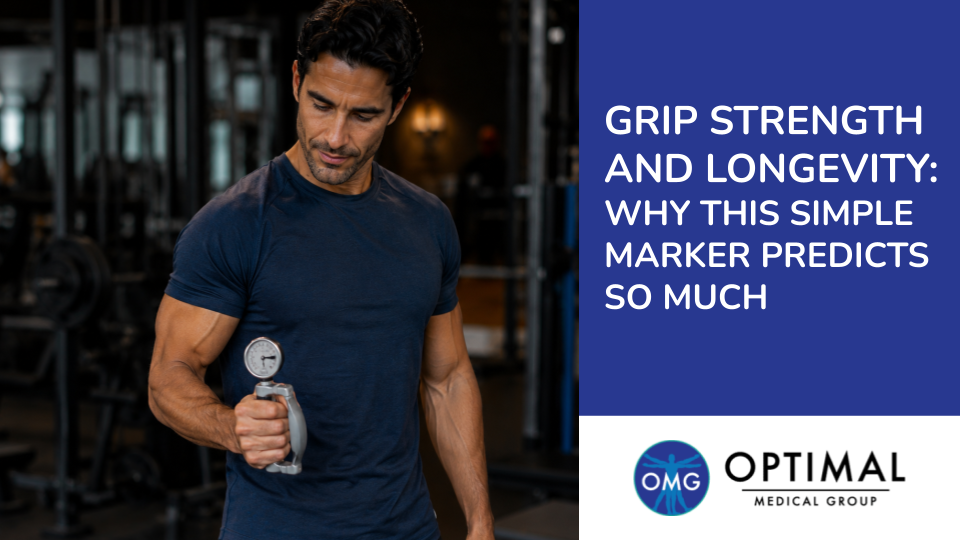
Grip strength and longevity are closely linked. Handgrip strength is one of the strongest single predictors of all-cause mortality, cardiovascular risk, and overall functional health. It is not just a measure of how hard someone can squeeze. It reflects the condition of the entire muscular system, the nervous system, and the hormonal environment that supports both. The encouraging part is that grip strength responds well to training at any age. Simple, consistent effort can rebuild what time quietly takes away and shift long-term health outcomes in a measurable direction.
A meta-analysis of over three million participants found that every five-kilogram decrease in grip strength was associated with a sixteen-percent increase in mortality risk.
Age-related muscle loss, known as sarcopenia, typically begins around age fifty and accelerates after sixty, contributing directly to declining grip strength.
Hormonal changes, reduced nerve efficiency, chronic inflammation, and physical inactivity all play a role in grip strength decline.
Resistance training, daily functional activity, and proactive medical evaluation can slow, stop, or reverse grip strength loss at any stage.
A long and healthy life is shaped by a short list of things that can be measured right now. Three building blocks matter most: aerobic fitness, muscle, and steady blood sugar and cholesterol. Aerobic fitness sets how much a person can do before the body feels the strain. Muscle drives metabolism and keeps the body…
Healthy weight loss per week usually means a steady one to two pounds, a pace most people can hold and keep off. People who lose weight at this gradual rate are more likely to keep the weight off than people who lose it quickly. Faster loss is possible, but it often costs muscle. Muscle keeps…
P-Shot treatment is an in-office procedure that helps men pursue stronger, more reliable erections and improved sexual performance using nothing but their own blood. The P-Shot, short for Priapus Shot, targets the root of most erection problems: blood flow. A small blood sample is spun down to concentrate the platelets into platelet-rich plasma (PRP), which…
Hormone imbalance and mental health are closely linked, because hormonal changes can affect far more than the body. When hormones fall out of balance, the effects often show up as mood swings, lack of energy, sleep disturbances, decreased libido, and even depression. Hormones help control mood and the sleep-wake cycle, so even small shifts can…