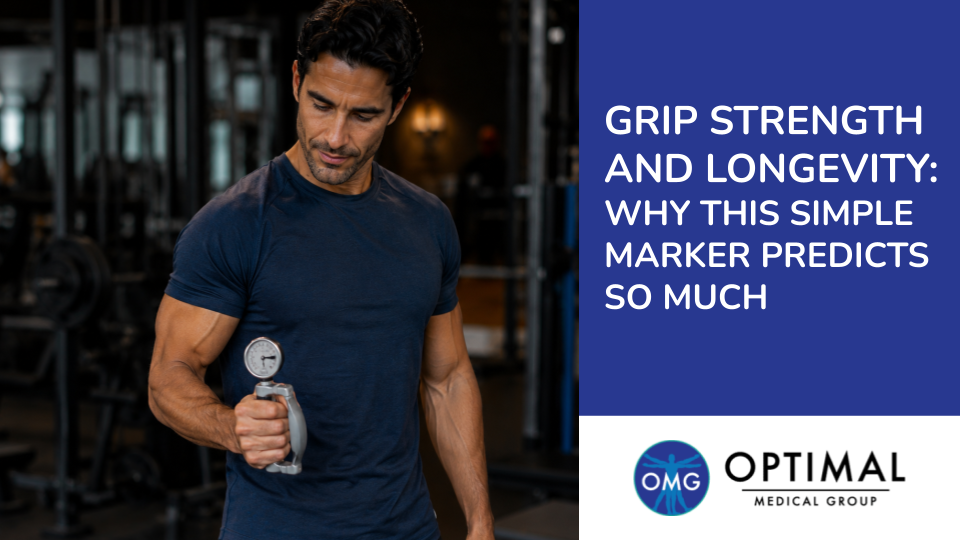
Grip strength and longevity are closely linked. Handgrip strength is one of the strongest single predictors of all-cause mortality, cardiovascular risk, and overall functional health. It is not just a measure of how hard someone can squeeze. It reflects the condition of the entire muscular system, the nervous system, and the hormonal environment that supports both. The encouraging part is that grip strength responds well to training at any age. Simple, consistent effort can rebuild what time quietly takes away and shift long-term health outcomes in a measurable direction.
A meta-analysis of over three million participants found that every five-kilogram decrease in grip strength was associated with a sixteen-percent increase in mortality risk.
Age-related muscle loss, known as sarcopenia, typically begins around age fifty and accelerates after sixty, contributing directly to declining grip strength.
Hormonal changes, reduced nerve efficiency, chronic inflammation, and physical inactivity all play a role in grip strength decline.
Resistance training, daily functional activity, and proactive medical evaluation can slow, stop, or reverse grip strength loss at any stage.
Fat loss vs weight loss is a distinction that changes how results are measured, pursued, and sustained. Most diet programs focus on the scale. But the scale cannot tell the difference between fat lost and muscle lost. When weight drops through calorie restriction alone, a significant portion of that loss often comes from lean tissue…
Hormone imbalance treatment begins with understanding that hormones do not operate in isolation. They run as an interconnected system. When one hormone drifts out of range, it creates a cascade of effects across energy, sleep, mood, body composition, libido, focus, and stress resilience. That is why the symptoms often seem unrelated.Fatigue shows up alongside weight…
Bioidentical hormone replacement therapy (BHRT) is a physician-supervised treatment that uses hormones structurally identical to those the body produces naturally. It restores balance in patients experiencing hormonal decline. Unlike synthetic hormone formulations, bioidentical hormones are designed to match the body's own chemistry. That structural match allows for more predictable absorption and fewer side effects for…
A comprehensive health assessment goes far beyond the standard annual physical. It is a multi-hour, multi-system evaluation that examines how the body is actually functioning across every major system, cardiovascular, metabolic, hormonal, musculoskeletal, and cognitive. Standard physicals check a narrow set of markers and screen for disease.A comprehensive assessment looks deeper, earlier, and wider. It…